

Physical Therapy Info Health Tips
Our Integrated Physical Therapy blog, your go-to source for physical therapy articles and holistic health information. We provide expert insights, practical physical therapy tips, and the latest developments in the field. Whether you're recovering from an injury, managing chronic pain, or looking to improve your overall well-being, our physical therapy blog covers a variety of helpful topics.
Our goal is to empower you with the information you need to take an active role in your health and recovery. Ready to schedule an appointment and take control of your health? Contact Integrated Physical Therapy at 305-967-8976.
Can the McKenzie Method Help Desk Workers in Wynwood with Neck Pain?
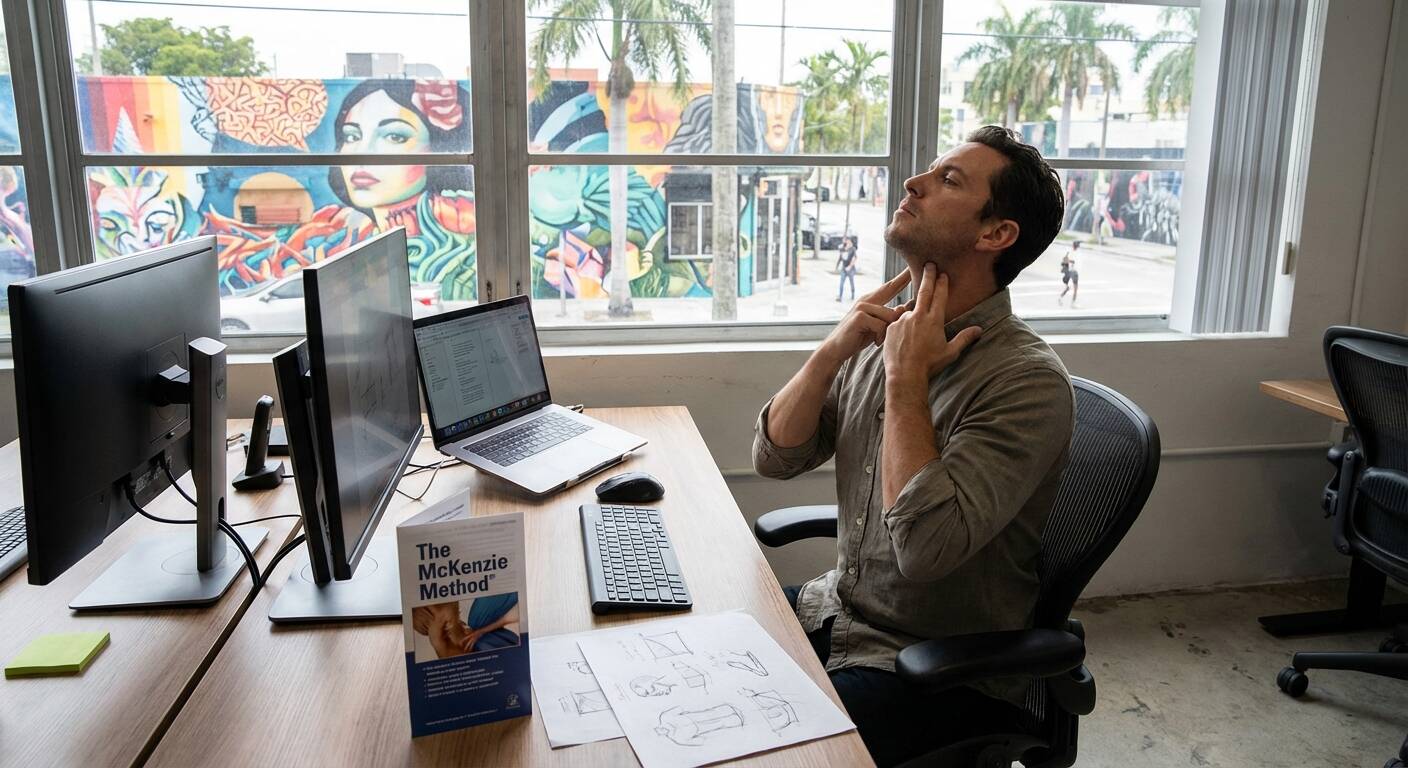
Desk workers in Wynwood don't just battle deadlines and creative blocks. They're fighting their own bodies. Hours bent over keyboards, screens tilted at the wrong angle, chairs that don't support anything — it all adds up. And the neck? That's where the damage shows first. Stiffness creeps in. Range of motion shrinks. Headaches start showing up uninvited. The McKenzie Method keeps coming up in conversations about relief, but most people don't know if it actually works or if it's just another thing physical therapists talk about to sound smart.
Here's what matters. If you're dealing with neck pain that won't quit, you need more than stretches you found on YouTube. You need a system that identifies what's broken and gives you the tools to fix it yourself. That's where McKenzie comes in — not as a magic bullet, but as a framework that puts the power back in your hands.
What the McKenzie Method Actually Does
Robin McKenzie didn't set out to revolutionize spine care. He stumbled onto something that worked, then spent decades refining it. The method — officially called Mechanical Diagnosis and Therapy — is built around one idea: your body gives clues about what's wrong, and the right movements can unlock relief. It's not about masking symptoms. It's about finding the mechanical issue and teaching you how to address it.
The process starts with assessment. A trained therapist watches how you move, asks you to repeat specific motions, and tracks what happens to your pain. Does it centralize? Does it spread? Does it disappear entirely when you tilt your head back? Those responses tell the story. From there, you get a classification and a prescription — not for pills, but for movements. The goal is simple: give you exercises you can do on your own, so you're not dependent on weekly appointments or passive treatments that don't stick.
Why Wynwood's Desk Crowd Is Hurting
Wynwood's creative scene thrives on hustle. Designers, developers, marketers — they're all grinding at desks for hours on end. But that grind comes with a price tag, and it's written all over their necks. Forward head posture becomes the default. Shoulders roll inward. The cervical spine takes on loads it wasn't designed to handle. Over time, muscles tighten, discs compress, and pain becomes the new normal.
The warning signs show up in predictable patterns:
- Chronic stiffness that doesn't ease up after a weekend
- Tension headaches that start at the base of the skull
- Shoulder pain that radiates down into the upper back
- Limited ability to turn your head without discomfort
- Occasional tingling or weakness in the arms
Ignore those signals long enough, and you're not just dealing with discomfort. You're looking at reduced productivity, mood swings, and a quality of life that takes a nosedive.
How the Assessment Pinpoints the Problem
The McKenzie Method doesn't guess. It tests. When you walk into a session, the therapist isn't just asking where it hurts. They're watching how you move, how your symptoms respond to different positions, and whether certain motions make things better or worse. You might be asked to bend your neck forward, extend it backward, or rotate side to side — all while the therapist tracks changes in your pain.
That data drives the diagnosis. Some people respond to extension exercises. Others need flexion. A few need lateral movements. The classification determines the treatment, and the treatment is built around what your body actually needs — not a one-size-fits-all protocol pulled from a manual. Many patients benefit from combining this approach with manual therapy for enhanced results.
Exercises You Can Actually Use at Your Desk
One of the biggest advantages of McKenzie is practicality. You don't need a gym membership or fancy equipment. Most exercises can be done right at your workstation, which means you can address pain as it happens instead of waiting until you're off the clock.
Common movements include:
- Chin tucks to counteract forward head posture
- Neck extensions to restore natural curvature
- Shoulder blade squeezes to open up the chest
- Controlled rotations to maintain range of motion
- Postural resets performed every hour
The key is consistency. Doing these once won't change anything. Building them into your daily routine — that's where the relief comes from.

What Makes This Different from Generic Stretching
Plenty of desk workers try stretching when their neck starts acting up. They roll their shoulders, tilt their head side to side, maybe do a few neck circles. Sometimes it helps. Often it doesn't. The difference with McKenzie is specificity. You're not just moving for the sake of movement. You're performing exercises that target the mechanical dysfunction causing your pain.
Generic stretches might feel good in the moment, but they don't address the root cause. McKenzie does. It identifies whether your pain is coming from a disc issue, a postural problem, or something else entirely — and then gives you the exact movements needed to fix it. That's why people who've tried everything else often find relief with this method. It's not about doing more. It's about doing the right thing. For comprehensive care, many patients also explore orthopedic rehabilitation options.
When the Method Isn't the Right Fit
McKenzie works for a lot of people, but it's not a universal solution. If your neck pain is tied to a serious injury, infection, or structural damage, you need medical intervention — not exercises. Red flags include:
- Severe pain that doesn't respond to any position changes
- Numbness or weakness that's getting worse
- Loss of coordination or balance
- Pain accompanied by fever or unexplained weight loss
- History of trauma or significant injury
If any of those apply, skip the self-treatment and get a proper diagnosis. McKenzie is powerful, but it's not a substitute for medical care when something serious is going on.
Finding a Certified Practitioner in Wynwood
The method only works if it's applied correctly. That means finding a therapist who's actually trained in McKenzie — not someone who just read about it online. Certification matters. A qualified practitioner knows how to assess your symptoms, classify your condition, and prescribe the right exercises. They also know when to refer you out if McKenzie isn't the answer.
Wynwood has access to skilled physical therapists, but not all of them specialize in MDT. Do your homework. Ask about credentials. Make sure the person guiding your treatment has the training to back it up. The difference between a certified McKenzie therapist and someone winging it can be the difference between relief and wasted time. Our Wynwood location offers specialized McKenzie-trained practitioners who can properly assess and treat your condition.
Taking Control Before the Pain Takes Over
Neck pain doesn't have to be part of the job description. Desk workers in Wynwood have options, and the McKenzie Method is one of the most effective when applied correctly. It's not about quick fixes or passive treatments. It's about understanding what's causing the problem and learning how to manage it yourself. That's the kind of solution that sticks — not just for this flare-up, but for the long haul. If your neck's been screaming at you for months, it might be time to listen. And it might be time to try something that actually works. Learn more about why IPT takes a comprehensive approach to treating neck pain and other musculoskeletal conditions. You can also explore our full range of physical therapy services to find the right treatment plan for your needs.
Ready to Reclaim Comfort at Your Desk?
We know how frustrating it is to have neck pain slow you down at work and beyond. Let’s work together to find lasting relief and get you back to feeling your best. If you’re ready to take the next step, give us a call at 305-967-8976 or request an appointment and let’s start your path to a pain-free workday.